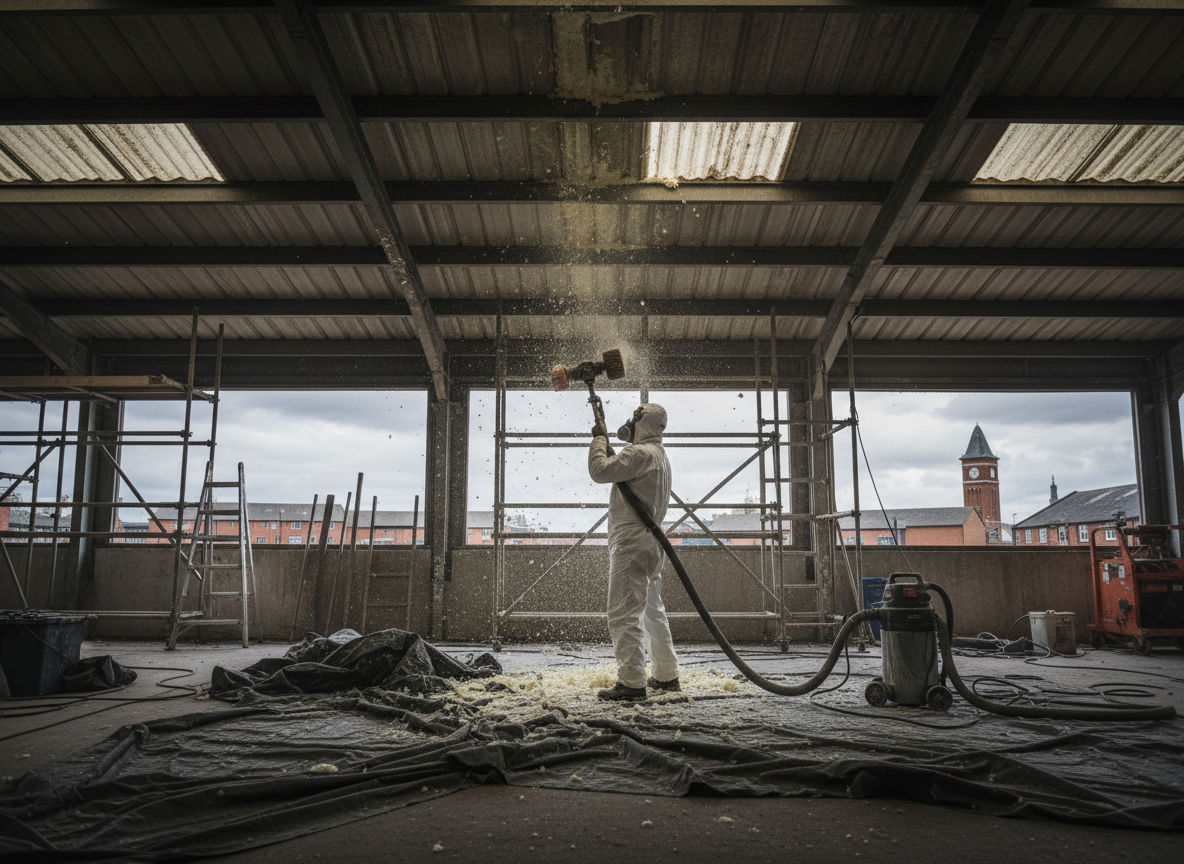
Commercial buildings in Croydon often feature spray foam applied to roofs and cavity walls in the 1970s and 1980s to combat damp in the area's mixed stock of Victorian warehouses and post-war offices. Removal requires separating the foam from metal decking, concrete soffits and timber joists without damaging structural elements or releasing fibres into ventilation systems. Work frequently occurs above active retail units or offices near East Croydon station, so containment and phased access are essential to keep businesses running.
Moisture trapped behind foam in Croydon's damp climate can lead to hidden rot in roof timbers and corrosion on steel beams, especially in properties around the town centre and Purley Way industrial estates. Technicians must inspect for these issues before extraction and coordinate with building managers to maintain fire compartmentation during the process. Older commercial stock near the railway lines also tends to have multiple layers of previous insulation that complicate clean removal.
UK building regulations require proper waste classification and disposal of removed foam, particularly when it contains legacy flame retardants common in Greater London commercial refurbishments. Site-specific risk assessments address access via goods lifts or external scaffolding in tight Croydon back streets. Final verification includes checking that original ventilation paths are restored to prevent future condensation problems in the remaining structure.
Technician insight
In Croydon, the thing that catches most people out with Commercial Spray Foam Removal is the hidden multiple layers of foam and bitumen on flat roofs of 1960s-80s office blocks around the Whitgift Centre and near East Croydon station, which turns a straightforward job into days of careful scraping once you start peeling back the first layer.
Retail Unit Roof Void, Croydon Town Centre
Spray foam in a ground-floor retail unit near Surrey Street market had begun trapping moisture against the steel beams. Inspection revealed two separate foam applications over an older mineral wool layer. Crews removed the material in controlled sections during night hours to avoid disrupting daytime trade, then cleared the void and restored ventilation paths.
How it works
- 1
Site Survey and Testing
Technicians inspect the commercial space, test for hidden hazards and map foam locations across ceilings, walls and roof voids.
- 2
Containment Setup
Dust and fibre barriers are installed to protect occupied areas while maintaining access for staff in Croydon offices or shops.
- 3
Controlled Extraction
Foam is removed in sections using specialist equipment that limits damage to underlying substrates and existing services.
- 4
Clearance and Disposal
All material is bagged, removed from site and disposed of according to local waste rules before final inspection.
Pricing
Pricing depends on building height, foam thickness and access constraints typical of Croydon commercial stock; site visit required for accurate quote.