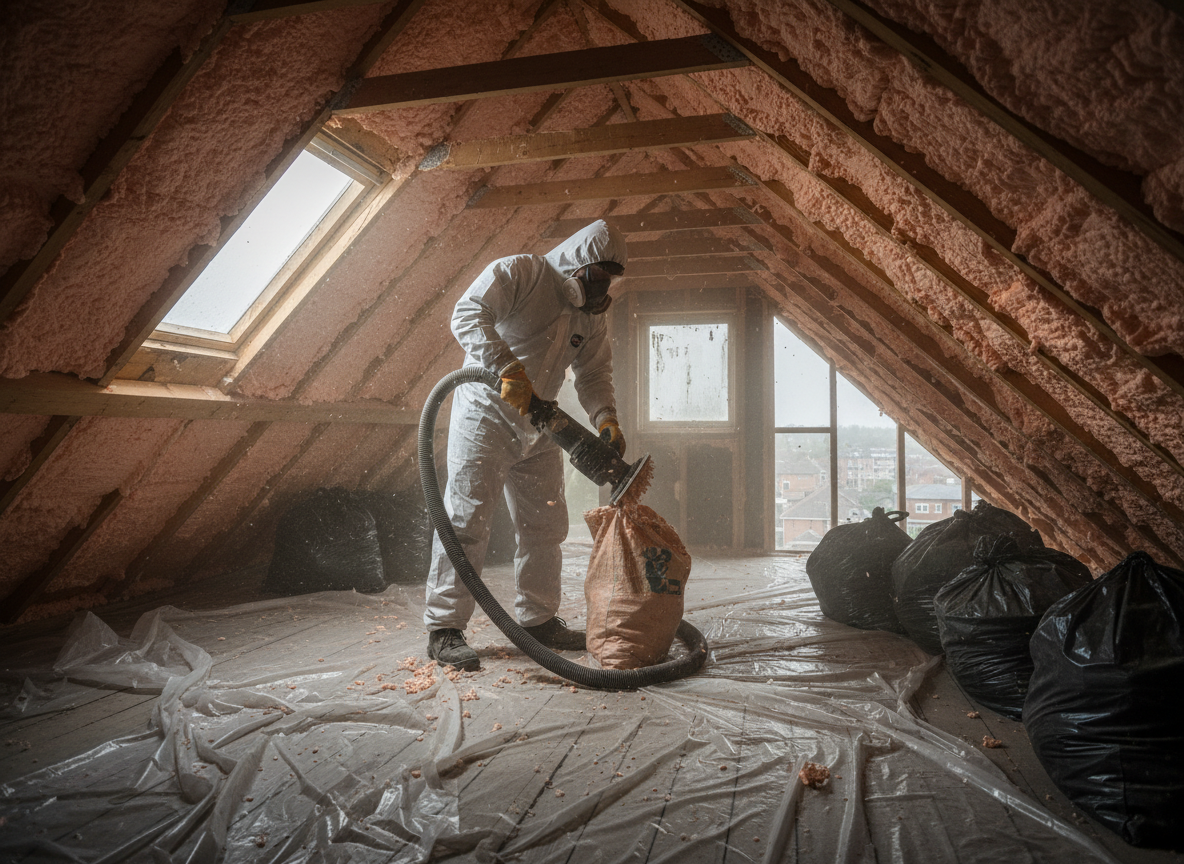
Croydon properties often feature pitched roofs on Victorian terraces and 1960s semis where closed-cell spray foam was applied directly to felt and rafters. Over time the foam traps condensation against timber, leading to rot that only becomes visible once the material is cut away. Removal requires section-by-section extraction to avoid damaging original lath and plaster ceilings below while containing dust that can migrate into living spaces through party walls common in South Croydon streets.
Work in the CR0 postcode frequently involves navigating narrow loft hatches and low eaves found in homes around East Croydon station. Foam thickness varies from 100 mm to over 200 mm in extensions added during the 2000s, changing the time needed for safe mechanical removal and bagging. Disposal must follow Greater London waste rules for expanding foam, which means separating contaminated timber and arranging licensed haulage rather than standard skip collection.
Homeowners in areas such as Shirley and Addiscombe sometimes discover that previous installations blocked roof ventilation, creating black mould on rafters once the foam is gone. Proper removal includes clearing debris from between joists and checking for hidden water ingress points before any new insulation is considered. This step prevents repeat problems that are common when foam is simply covered over instead of fully extracted.
Technician insight
In Croydon, the thing that catches most people out with loft spray foam removal is how many 1930s semis around the Interchange have had foam sprayed right into the eaves, leaving almost no crawl space and forcing slower hand work to avoid tearing the felt.
Foam Extraction in a West Croydon Terrace
Homeowner reported musty smells after heavy rain. Inspection showed closed-cell foam sealing moisture against rafters in a 1920s terrace. We removed the foam section by section, cleared debris from the eaves, and opened ventilation paths. The loft dried out and the smell disappeared without further repairs.
How it works
- 1
Site Assessment
Inspect loft access, foam depth, roof condition and any signs of trapped moisture in Croydon properties.
- 2
Protection and Containment
Cover floors, stairwells and electrics then seal openings to stop dust travelling into living areas.
- 3
Mechanical Removal
Cut and peel foam in sections, clearing material from rafters and eaves without damaging original roof timbers.
- 4
Clearance and Disposal
Bag all waste on site and arrange licensed removal compliant with local Greater London regulations.
- 5
Final Check
Verify loft is clear, check for hidden damp and confirm ventilation paths are open before handover.
Pricing
Cost based on loft size, foam thickness and access difficulty; site visit provides exact scope before work begins.