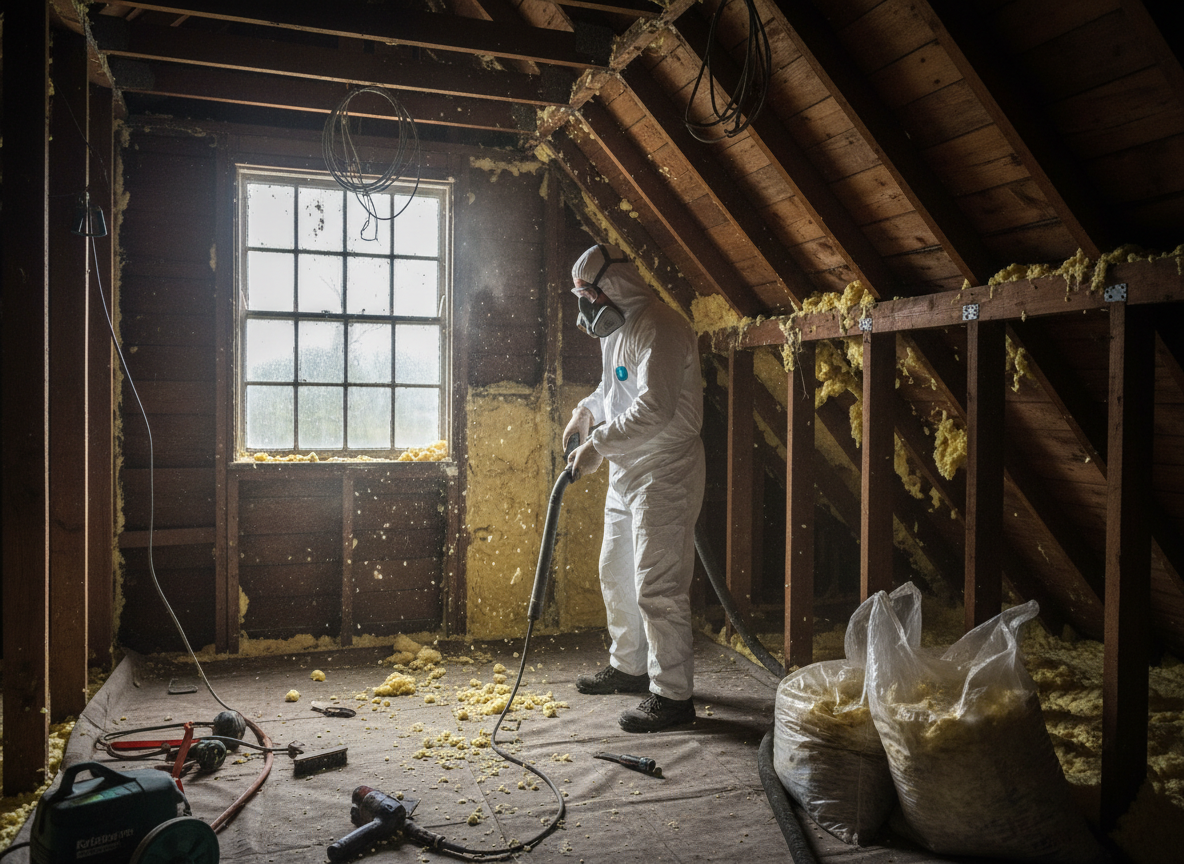
Spray foam insulation installed in Croydon lofts often traps moisture because of the area's high rainfall and older roof constructions common in Victorian terraces around Thornton Heath and South Norwood. Removal requires careful cutting and vacuum extraction to avoid damaging original timber joists that have already absorbed damp from decades of exposure. Homeowners frequently discover hidden mould growth once the foam is peeled back, especially in properties near the railway lines where condensation builds quickly during winter.
The process starts with full containment to prevent foam particles drifting into living spaces below. Technicians use oscillating blades and industrial vacuums to lift the material layer by layer, checking for rot in the roof decking that is typical in post-war semis found throughout the CR0 postcode. Any remaining residue must be neutralised because leftover polyurethane can react with new insulation or plasterboard later installed in the same space.
Croydon properties built before the 1970s often have limited loft access and narrow crawl spaces that make full extraction slower than in newer builds. Weather patterns matter here: jobs scheduled after heavy rain require extra drying time before new insulation can go in, otherwise the same moisture problems repeat. Local building regulations around thermal performance also influence whether the roof needs additional ventilation upgrades once the foam is gone.
Edge cases include foam that has expanded into electrical cables or pipework, which is common in converted flats near East Croydon station. These situations demand hand removal rather than mechanical methods to prevent damage that could affect the whole building's electrics or plumbing.
Technician insight
In Croydon, the thing that catches most people out with Spray Foam Removal near me is how the frequent rain and older Victorian terraces around the town centre let moisture sit under the foam for years, so the joists are often already soft by the time we arrive.
Hidden Rot in Thornton Heath Loft
Homeowner in a 1930s semi called after noticing musty smells. We found spray foam that had sealed in rainwater leaks around the chimney. Extraction revealed soft timber that needed localised repair before any new insulation could be considered. The job finished with full clearance and ventilation recommendations to stop recurrence.
How it works
- 1
Site Assessment
Inspect loft or cavity, identify foam type and depth, check for moisture damage in Croydon roof structures.
- 2
Containment Setup
Seal work area to protect living spaces from dust and debris during extraction.
- 3
Foam Extraction
Cut and vacuum material in layers, clearing residue from joists and decking.
- 4
Cleanup and Disposal
Remove all waste, clean surfaces, and advise on ventilation improvements needed for the property.
Pricing
Upfront quotes based on property size, foam depth and access; 24/7 availability from our Croydon base.