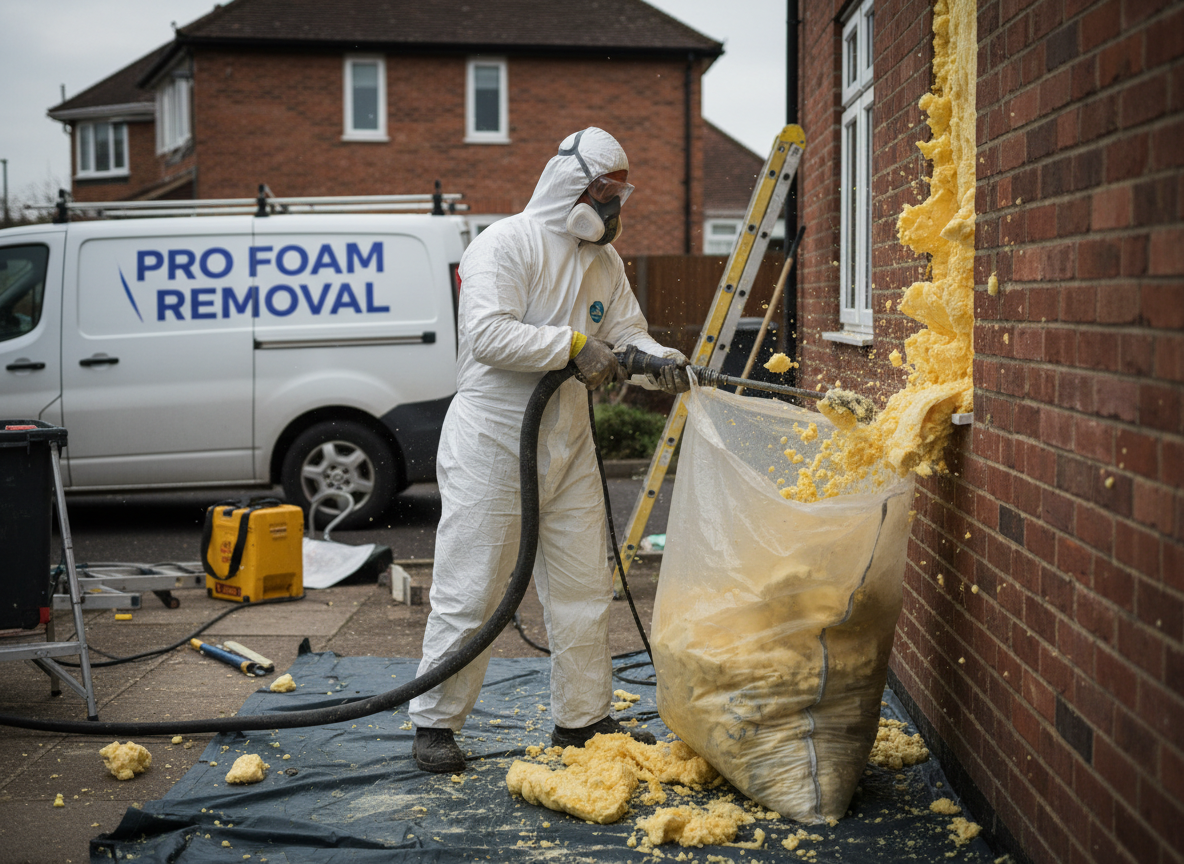
Croydon properties from the 1930s to 1970s often feature narrow brick cavity walls that were later injected with spray foam insulation. Over time the foam absorbs moisture from the area's frequent rainfall and high humidity, leading to damp patches on internal walls and reduced thermal performance. Removal requires drilling access points at regular intervals then using mechanical extraction tools to pull the foam free without cracking the brickwork or damaging wall ties common in these older builds.
Edge cases include foam that has expanded into weep holes or bonded directly to mortar in terraces around Thornton Heath and South Norwood. London Building Regulations now discourage cavity fill in exposed locations because it can trap water; any removal work must leave the cavity clear and ventilated to prevent future condensation issues. Homeowners sometimes attempt DIY drilling which risks hitting electrical cables or pipes hidden behind the plaster.
Weather patterns matter here. Wet winters increase the urgency because saturated foam becomes heavier and harder to extract cleanly. After removal the cavity is inspected for debris and the external brickwork is checked for damage before any re-plastering. Properties near main roads in Croydon can also have extra soot and pollution lodged in the foam, requiring thorough vacuuming during extraction.
Owner-operated teams based at Interchange, Station Rd work 24/7 to handle urgent damp cases before they spread to neighbouring properties in the terrace. The process avoids chemical solvents that could affect nearby gardens or drainage in the clay-heavy soil typical of the Croydon area.
Technician insight
In Croydon, the thing that catches most people out with Cavity wall spray foam removal is how the 1930s terraces around Addiscombe and Shirley have very narrow cavities where the foam bonds hard to the inner brick leaf, especially after a wet winter when the clay soil holds extra moisture.
Damp in a South Croydon terrace
Homeowner noticed recurring black mould on the gable wall after heavy autumn rain. Inspection showed spray foam had blocked weep holes and trapped water. We drilled staggered access points, extracted the saturated foam mechanically, cleared the cavity and restored the mortar. The wall dried out over the following weeks with no further damp reports.
How it works
- 1
Site Inspection
Survey the property to map cavity depth, foam type and any existing damp or wall-tie issues in Croydon brick homes.
- 2
Access Preparation
Drill controlled entry holes at set intervals along the external wall while protecting surrounding brick and mortar.
- 3
Foam Extraction
Use mechanical tools and vacuum extraction to remove the foam completely, clearing weep holes and debris from the cavity.
- 4
Cavity Clearance And Check
Inspect the empty cavity for remaining material, clean thoroughly and verify wall ties remain intact.
- 5
Restoration
Fill access holes with matching mortar and advise on ventilation to prevent future moisture problems.
Pricing
Cost depends on wall area, foam density and access difficulty; upfront quotes provided after inspection.