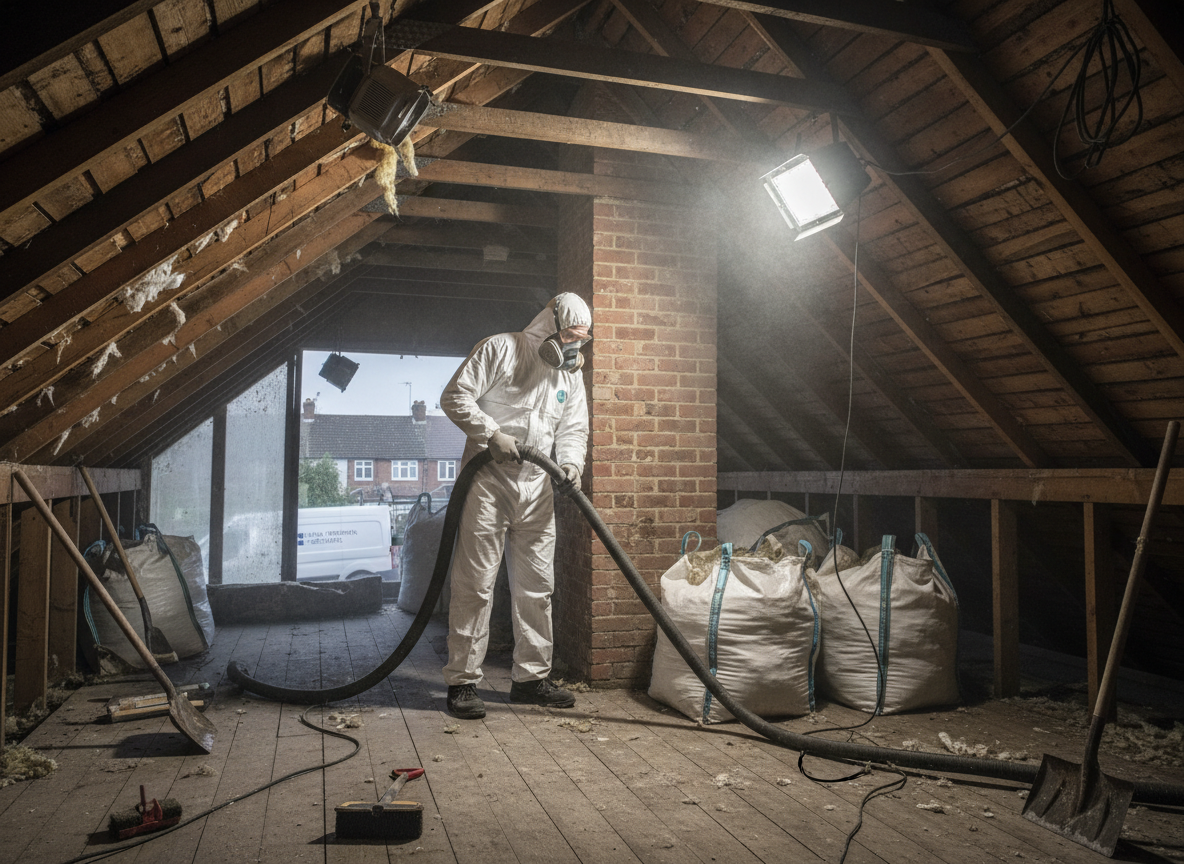
Croydon’s housing stock includes many 1930s semis and Victorian terraces where spray foam was applied to lofts in later decades. Over time the foam traps moisture against rafters and ceilings, especially during the area’s frequent damp winters. Homeowners often discover musty odours or reduced airflow once the material begins to degrade. Removal requires isolating the loft, cutting the foam in controlled sections and extracting it without disturbing original timber or insulation layers that remain sound.
Edge cases appear regularly in properties near Thornton Heath and South Croydon where foam has been pumped into cavity walls. These installations can block weep holes and create hidden damp patches on internal brickwork. Technicians must map the wall construction first, then use contained negative-pressure equipment to pull the material outward while monitoring for dust migration into living spaces. Post-removal ventilation checks are essential because older roofs in the CR0 postcode often rely on natural stack effect that foam previously blocked.
Handling Degraded Foam in Croydon Lofts
When foam has bonded to felt or sarking boards, crews work in small bays to avoid tearing underlay. Each section is bagged at source and lowered through the hatch to prevent debris falling into rooms below. Final inspection includes checking for remaining residue that could affect new insulation and confirming that eaves and ridge ventilation remain clear after extraction.
Technician insight
In Croydon, the thing that catches most people out with insulation removal service is the way 1930s semis around Thornton Heath and Addiscombe have spray foam that has trapped years of winter damp against the original rafters. Once you start cutting, you often find the felt has started to rot underneath and the job suddenly widens to include ventilation repairs that were never visible from below.
Degraded Loft Foam in Addiscombe Terrace
Homeowner reported persistent loft odours after heavy rain. Inspection showed closed-cell foam had bonded to degraded felt and blocked eaves vents. Crew removed the foam in controlled bays, cleared the blocked vents and confirmed airflow through the ridge before leaving the property.
How it works
- 1
Site Assessment
Inspect loft or cavity access, measure foam depth and note any signs of moisture or timber decay.
- 2
Containment Setup
Seal the work area with sheeting and negative-pressure units to keep dust from entering living spaces.
- 3
Foam Extraction
Cut and remove foam in sections, bagging material at source before lowering it through the hatch.
- 4
Clearance and Ventilation Check
Vacuum residue, inspect rafters and confirm eaves and ridge vents are unobstructed.
Pricing
Cost depends on access difficulty, foam thickness and whether wall cavities are involved; site visit provides accurate scope.